How to Scale a Business Successfully in Australia
Apr 24, 2026

With almost 2.6 million small businesses contributing approximately $590 billion to the economy annually, it is clear that these businesses are a crucial part of Australia’s economy. Yet for all that scale, the transition from stable small business to growing enterprise remains one of the hardest things a founder navigates.
Growing revenue is straightforward in theory. Doing it without multiplying costs, overloading your team, or eroding the quality that built your reputation is another matter entirely.
Unlike markets that reward rapid, high-growth sprints, Australia tends to favour disciplined, sustainable scaling: building the right foundations first, then expanding with confidence.
Therefore, if you are ready to move from steady to scalable, knowing how to scale up your business starts with understanding what actually needs to be in place before you grow.
Knowing When Your Business Is Ready to Scale
Scaling too early is one of the most common and costly mistakes in small business growth. Instead, profitability and operational consistency matter more than growth speed as investors and lenders value resilience over trajectory.
So, before committing to expansion, look for a set of clear and concurrent signals:
- Product-market fit: Customers are buying, staying, and referring others without heavy persuasion.
- Repeatable revenue: Growth is not reliant on a handful of relationships or one-off wins.
- Team capacity: Your team handles current operations without working at the limit all the time.
- Financial runway: You have enough buffer to absorb the hiring delays Australian businesses regularly encounter, particularly in competitive markets like Sydney and Melbourne.
Strengthening Your Operational Foundation
Systems before growth. This is the step most founders skip, and it is usually why they plateau.
Before you increase demand, document your core delivery process, including every step, decision point, and quality check. For example, wherever a team member defaults to asking you when something goes wrong, it demonstrates that there is a system gap. In turn, cataloguing and resolving those gaps will enable your small business to grow without you becoming the bottleneck.
Once your core process is documented, turn your attention to the broader infrastructure that scaling will put under pressure:
- IT infrastructure: Can your platform or tools handle significantly more users or transactions?
- Customer support: Can you maintain response times and service quality as demand grows?
- Supplier and vendor reliability: Do your supply chains hold up across multiple states or regions?
- Workspace: Rather than locking into fixed overhead from a long lease in one location, are there coworking spaces that let you establish a professional presence for hybrid and multi-city teams?
Building the Right Team for Growth
Australia's talent market is competitive, and skills shortages across technology, operations, and finance mean that bad hires are expensive to unwind under Fair Work Act obligations.
Given that context, intentional hiring matters more than fast hiring. At the growth stage, focus on:
- Mid-to-senior operators: Staff who can work autonomously and make decisions without waiting for sign-off.
- People who build, not just follow: Candidates who can create processes, not just execute them.
- Leaders for distributed teams: With operations potentially spanning multiple cities, you need managers who can keep performance consistent without constant central oversight.
Funding Growth the Smart Way
When it comes to funding, Australian founders have more options than is sometimes assumed, and the right choice depends on your sector, stage, and appetite for dilution. Beyond accelerators and incubators, here are other options:
- Private investment: Suits founders planning to scale quickly and willing to give up equity for capital and networks.
- Revenue-led growth: Slower, but keeps control with the founder and avoids early-stage dilution.
- Bootstrapped expansion: Viable for service businesses with strong margins and predictable cash flow.
Regardless of which route you pursue, investor and lender expectations tend to be consistent. Before approaching anyone for funding, make sure you can answer the following clearly:
- What is your customer acquisition cost?
- What is your churn rate and average customer lifetime value?
- What do your margins look like at the current scale, and how do they change as you grow?
If any of those questions require more than a moment's thought, that is worth addressing before your funding conversation begins.
Scaling Your Marketing Without Losing Focus
Australia's consumer market is digitally mature and highly competitive, which means that founders who scale marketing effectively tend to concentrate on fewer channels with greater discipline rather than spreading budgets thin.
As a starting framework, consider prioritising in this order:
- Performance marketing: Define your ideal customer, test with small budgets, and scale only what converts.
- SEO and content: Build long-term organic visibility and reduce dependence on paid acquisition over time.
- Brand consistency: Have a clear and consistent message across two or three channels rather than an unfocused presence across ten.
- Retention over acquisition: Existing customers cost less to serve and refer to others, so prioritise keeping them before spending heavily on new ones.
Expanding Products, Services, or Markets
Business expansion does not always mean going wider. For many Australian SMEs at the growth stage, sustainable expansion can also follow these paths:
- Deepening existing offerings first: Increasing share of wallet with current customers typically produces better returns than launching new products before the core is optimised.
- Expand geographically with infrastructure in place: Moving into a new city can work well, but the operational foundations need to come before the market commitment, not after.
- Diversify carefully and deliberately: New product lines make sense when they serve an existing customer need you are already close to, not when they are pursued to offset a struggling core.
Designing a Business That Does Not Depend on You
Founder dependency is a common growth ceiling for Australian SMEs. If every significant decision, client relationship, or quality check runs through you, the business will not be able to scale beyond your personal capacity.
To combat such dependency, you will need:
- Documented SOPs so the team performs consistently without waiting for direction.
- Deliberate delegation to leaders who are accountable for outcomes, not just tasks.
- Automation of the repetitive, low-judgement work that consumes hours every week.
The same logic applies to your physical working environment, where every operational burden you can remove from the business gives founders and leadership teams more room to focus on strategy.
In this regard, having a flexible office infrastructure will go a long way in supporting this shift, as when workspace logistics and facilities management are handled externally, your attention can stay where it is needed most.
Scaling with Confidence at The Work Project Australia
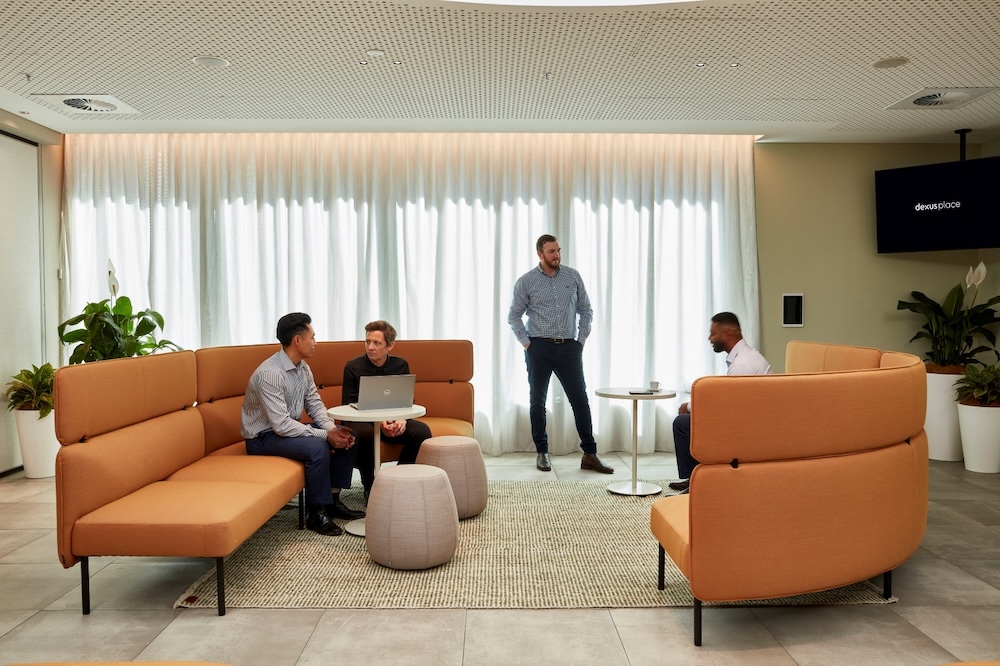
Knowing how to remove operational friction is one of the clearest ways to scale a business more quickly, and an agile workspace is one of the most practical places to start.
If you’re looking for an environment that grows with your business, The Work Project has offices across key business hubs in Sydney, Melbourne, Brisbane, and Perth designed for exactly that.
Whether it’s a hot desk rental for a lean early-stage team, a virtual office in Sydney to establish a professional presence, or a shared office in Melbourne for an expanding team, our options adapt to where you are in your growth journey.
So, find the right space for the next stage of your business. Book a tour today.