How Do Startups Get Funded in Australia?
Apr 24, 2026

Australian startup funding hit A$5.4 billion in 2025, up 31% on the year prior, with AI infrastructure, Fintech, and Climate Tech leading the charge. Airwallex raised over A$960 million across two rounds. Firmus secured A$830 million to build sovereign AI data centres. Synchron drew A$305 million, with the federal National Reconstruction Fund among its backers. The numbers make one thing clear: serious capital is moving through this market, and founders who understand how to access it are in a stronger position than ever.
The real "Australian way" of funding a startup rarely runs through the Big Four banks alone. Non-dilutive government R&D support and private venture capital are increasingly the twin engines of early-stage growth, particularly for tech-driven businesses.
Why is Australia Good for Startup Growth?
Australia's proximity to the APAC market, combined with a high standard of professional services and a mature legal and financial infrastructure, gives founders a credible launchpad for global ambitions. State-based hubs like Tech Central in NSW, Breakthrough Victoria, and the national Workforce Australia network are producing a denser, more connected startup community than existed even five years ago.
At the federal level, the National Reconstruction Fund's $15 billion commitment to priority sectors, including AI, quantum computing, and renewable energy, is directing institutional capital into exactly the areas where Australian founders are building. Government-backed innovation strategy is actively shaping where funding flows, and startups aligned with those priorities are finding more doors open.
How to Get Funding for Startups in Australia
1. Self-Funding and Bootstrapping
Most founders start here. Bootstrapping means using personal savings, business revenue, or, in Australia's property-owning culture, a redraw on home equity to get the idea off the ground. The upside is full control. The trade-off is personal financial exposure, which demands a clear plan before you start spending.
One tax mechanism worth knowing: the Instant Asset Write-Off, extended into 2026, allows eligible businesses to immediately deduct purchases up to $20,000, easing early cash flow when every dollar counts. Keeping overheads low while you validate the business matters too. Renting a hot desk office space gives you the infrastructure and address of a real business without the fixed cost of a lease.
2. Angel Investors and Angel Groups
Once your idea has been validated and you need more than grants can provide, angel investors are a natural next step. In Australia, organised angel networks like Sydney Angels and Melbourne Angels give founders structured access to high-net-worth individuals who invest early in exchange for equity. Beyond the capital itself, the right angel brings "smart money". Essentially, that can be quantified by sector experience, founder networks, and the kind of introductions that are difficult to manufacture at the early stage.
2. Government Grants and Support
Government grants are non-dilutive, meaning no equity leaves the building. For early-stage founders still building their MVP, that matters.
Key programmes in 2026 include:
- R&D Tax Incentive (R&DTI): The gold standard of non-dilutive startup funding in Australia. Eligible companies can claim a 43.5% refundable tax offset on qualifying R&D expenditure, which puts real cash back on the table at tax time.
- Industry Growth Program (IGP): Designed to help innovative SMEs commercialise and scale. Grants range from $50,000 to $5 million, covering advisory support and co-funding.
- CSIRO Kick-Start: Matches funding of up to $50,000 for collaborative R&D projects with Australia's national science agency, making it a natural fit for deep-tech and science-led founders.
Reality check: TAFE micro-credentials in digital skills and business management are increasingly recognised by grant assessors as evidence of founder capability. If you are building a case for government support, investing in formal upskilling is worth considering.
3. Friends and Family
The FFF round (Friends, Family, and Fools) is where many Australian startups get their first cheque. Treat every arrangement as a professional agreement with documented terms, clear expectations, and a defined equity or repayment structure. Informal handshakes damage relationships when things go sideways.
A common Australian variation is sweat equity, where a friend or family member contributes expertise, such as legal advice, coding, or design work, in exchange for a small stake. Done properly, with a formal agreement and a fair valuation, it keeps your cap table clean while stretching early resources further.
4. Business Loans and Lines of Credit
Traditional bank loans remain an option, but specialist non-bank lenders have changed the game for startups without hard assets to pledge as collateral. Many now offer unsecured products that skip the "pledge your home" requirement, assessing eligibility on business performance and growth trajectory instead.
For R&D-heavy businesses, R&D financing is worth exploring: borrowing against your expected R&DTI refund to access cash well before the ATO processes your claim. It is a practical way to extend runway without waiting out the tax cycle.
5. Equity Crowdfunding and P2P Lending
Australia now has one of the more mature equity crowdfunding markets in the Asia-Pacific region. Platforms like Birchal and Equitise dominate the local space, and for consumer brands with a loyal community, a successful campaign does more than raise capital. It turns customers into shareholders and brand advocates, a genuine competitive advantage in a market where word-of-mouth still travels fast.
P2P lending platforms provide an alternative debt route, connecting founders directly with individual lenders and bypassing traditional intermediaries.
6. Venture Capital and Angel Investors
Angel investors typically bridge the gap between FFF funding and institutional VC. Networks like Sydney Angels and Melbourne Angels give founders structured access to early-stage capital and, equally valuable, sector expertise and warm introductions.
For Series A and beyond, Australia's VC community has deepened considerably. Blackbird Ventures, AirTree Ventures, and Square Peg Capital are the most active domestic funds backing high-growth technology companies. All three have backed businesses that went on to raise internationally and, in some cases, list.
Understanding the funding stage you are at sharpens who you should be talking to:
- Pre-Seed: Bootstrapping, FFF rounds, and early angel support while validating the concept
- Seed Stage: Angel networks, small government grants, and accelerator programmes
- Series A+: High-growth VC funds focused on scalable, metrics-driven businesses
7. Accelerators and Incubators
Beyond capital, the right programme accelerates the learning curve. The Founder Institute Australia helps early-stage founders build investor-ready businesses through structured pre-seed training. For deep-tech startups, CSIRO's ON Innovation Program provides specialised support for getting science-led ventures from lab to commercial readiness.
Government Programmes Supporting Australian Startup Funding
The R&D Tax Incentive
The R&DTI is the cornerstone of startup funding in Australia for any business investing in genuine research and development. The 43.5% refundable tax offset applies to eligible expenditure, effectively reducing the cost of innovation and putting cash back into the business at year-end. Early engagement with a registered tax agent is worthwhile; the eligibility criteria are specific, and a well-documented claim is far more defensible than a rushed one.
State-Specific Grants
State governments run targeted programmes worth knowing:
- NSW: The MVP Ventures Program offers grants of $25,000 to $50,000 for early-stage startups developing minimum viable products
- VIC: The Victorian Business Growth Fund supports scaling businesses with equity co-investment
- QLD: The Ignite Ideas Fund and the Female Founders Co-Investment Fund both provide targeted support for Queensland-based startups
Federal Industry Growth Program
The IGP is the federal government's primary vehicle for helping innovative SMEs commercialise and scale their products. It covers early-stage and growth-stage businesses across priority sectors, combining advisory support with co-funding.
Practical Tips to Secure Startup Funding
Getting in front of an investor is one thing. Closing a round is another. Four principles that matter in the 2026 environment:
- Step 1: Master the Financials. Investors want to see a credible path to profitability, not just growth projections. Know your unit economics before you walk into any room.
- Step 2: Build Traction First. Customer testimonials, pilot results, and a working MVP carry more weight than a polished slide about total addressable market.
- Step 3: Prepare a Tight Pitch Deck. Ten to twelve slides is the standard. Every slide should answer a question an investor is already asking.
- Step 4: Leverage Your Network. Warm introductions close faster than cold outreach, full stop. The Work Project's coworking spaces in Australia are where founders, mentors, and visiting investors regularly cross paths, and where relationships that accelerate rounds tend to start.
House Your New Startup in a Versatile Coworking Space

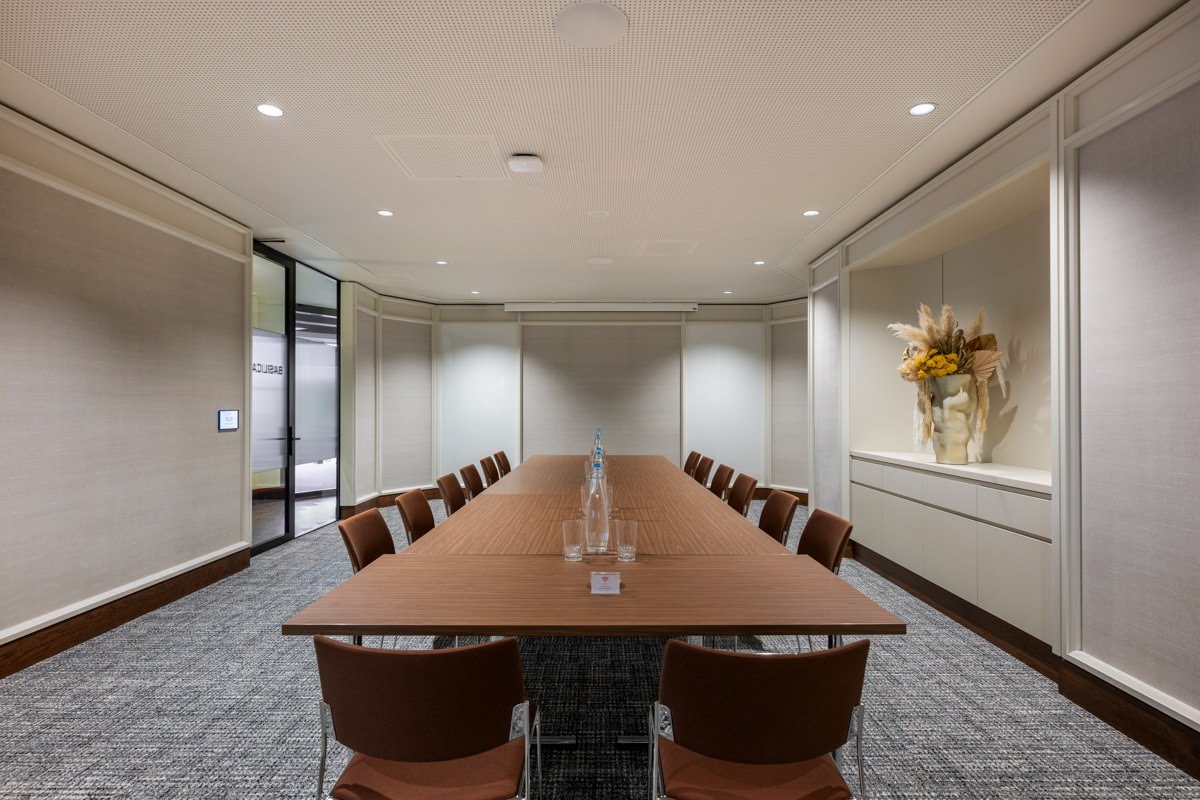
Perception matters in fundraising. A Pty Ltd presenting from a hotel-grade boardroom at Quay Quarter Tower in Sydney carries a different signal to a meeting held over coffee in a busy food court. Before a word is spoken, the environment sets a tone.
The Work Project's Sydney facilities are built for exactly this kind of ambition:
- Flexible workspace options: From dedicated desks to private offices, scale your footprint as the team grows, without committing to a fixed lease that drains your burn rate
- Premium meeting rooms: Professional spaces for investor conversations, client presentations, and due diligence sessions that need a credible backdrop
- Networking proximity: TWP's community of founders, operators, and occasional visiting VCs means the next important introduction is often closer than you think
Ready to scale? Book a tour of our Sydney coworking spaces and find the environment where your startup's next chapter begins.