How to Create a Strong Company Culture in Australia
Jul 16, 2026
Australian businesses operating in 2026 face a tighter labour market and rising employee expectations around hybrid work. Besides meeting expectations on salary and employee benefits, company culture, defined as the shared values, behaviours and unwritten rules that shape how a team works together day to day, is increasingly what determines whether an SME retains its people or watches them leave for the next offer. Office perks and Friday drinks contribute very little to that outcome on their own.
Strong company culture is built on six practical foundations:
- Clearly defined values that guide day-to-day decisions
- Leadership that models the behaviours the company expects
- Fair recognition paired with consistent accountability
- Ongoing investment in growth and development
- A genuine sense of belonging across the team
- Regular measurement, listening and adjustment
So how can Australian founders and SME owners create a strong company culture? Let’s explore the six foundational steps.
1. Start With Your Values
Clearly defined values are the foundation a positive company culture is built on. A set of three to five values, written in plain English and tied to specific behaviours, gives an Australian team a shared reference point for how decisions get made, how disagreements are handled and what good performance looks like.
Values that sit inside a brand deck no one opens have no effect on how the business runs. Values become operational when they are:
- Referenced in hiring conversations and interview scorecards
- Used as criteria in performance reviews and promotion decisions
- Called out by name in team meetings when a behaviour reflects them
- Co-created with the team rather than handed down by the founder alone
The founder is responsible for finalising the values, but bringing the team into a short structured exercise, where employees nominate the behaviours they already see working and the ones they want more of, produces values that feel earned rather than imposed.
2. Leadership Sets the Tone
Culture flows from the top, and senior leaders are an organisation’s most visible daily expression of its culture. What founders and executive leaders do consistently matters more than what they say. Visible and supportive leadership shows up in a few specific behaviours:
- Being present on the days the team is expected in
- Taking time for real conversations with people across the business
- Modelling the behaviours the stated values name
- Addressing missteps openly rather than working around them
The gap between what leaders say in town halls and how they behave in private conversation is the fastest way to erode trust in a stated culture. Middle managers carry equal weight. A team's daily experience of the company is mediated through their direct manager more than through the founder, so investing in management capability is one of the most direct ways to strengthen culture across an Australian SME.
3. Recognise Effort and Hold People Accountable
Fair workplaces hold recognition and accountability in equal measure. Recognising contribution well means acknowledging specific work in ways the person actually values. The strongest forms of recognition are:
- A clear written note acknowledging a specific contribution
- A mention in a team meeting that names the work and the outcome
- A salary review that reflects progression honestly
- A development opportunity that signals trust in the person's potential
Generic praise applied to everyone in equal measure reads as performative and lands flat.
Accountability is the other half of the same picture. Clear expectations, fair consequences when work falls short and consistent feedback applied across the team show that the company takes the work, and the people doing it, seriously.
Employees who watch underperformance go unaddressed lose faith in the culture faster than those who watch a difficult conversation handled fairly. When good work is seen and fair standards are held, capable employees stay.
4. Invest in Growth and Development
Professional development is one of the clearest signals a company values its people for the long term. The people development investments that move the needle inside an Australian SME include:
- Structured internal mentoring pairings between senior and junior staff
- Clear learning pathways tied to role progression and salary bands
- Stretch projects that give employees responsibility ahead of their job description
- Allocated time and budget for external training relevant to the role
For a startup or SME with a limited learning and development budget, structured internal mentoring is often the highest-return option to retain employees and scale the business.
Employees who feel they are growing inside the business are more engaged in their current role and less likely to take a recruiter call. In a tight talent market, development investment is one of the most cost-effective retention levers available to Australian founders, and it doubles as cultural evidence that the company is in it for the long term.
5. Foster Belonging and Employee Participation
Belonging goes beyond inclusion. It is the feeling of being valued for who you are, not only for what you produce. The Australian workforce is one of the most culturally diverse, which makes belonging a practical operational priority rather than a values-statement add-on.
Fostering company culture this way relies on creating real surface area for employee voice:
- Regular pulse surveys with a short, consistent set of questions
- Open team forums where issues can be raised early
- Skip-level conversations between employees and their manager's manager
- Visible follow-through on the items raised through any of the above
The fastest way to damage these channels is to collect feedback and do nothing with it. Even small visible actions in response to feedback show the team that participation matters.
6. Measure, Listen and Keep Improving
Building company culture is an ongoing programme of measurement, listening and adjustment rather than a one-time launch. Practical ways to measure culture inside an Australian business include:
- Short quarterly pulse surveys to track sentiment shifts
- Engagement scores benchmarked over time
- Voluntary turnover rates broken down by team and manager
- Exit interview themes consolidated quarterly
- Structured stay interviews with high-performing employees
Each gives a different angle on the same question. The data is only useful if it is acted on. Australian SMEs commonly run engagement surveys, file the results and move on, which trains the team that participation has no consequence. The companies that strengthen culture year on year share survey themes openly, name the two or three things they will change in response and report back on progress.
Build Strong Workplace Culture with The Work Project
The building blocks of a strong company culture work together rather than in isolation. Values give the team a shared reference, leadership behaviour makes those values real, fair recognition and accountability hold the standard, development shows long-term commitment, belonging makes genuine participation possible and ongoing measurement keeps each of these honest over time.
The common thread running through all of them is in-person interaction. Values get tested in meetings, leadership shows up in hallways and team rooms, recognition lands more strongly face to face, and the small daily conversations that build belonging are difficult to replicate in fully remote schedules.
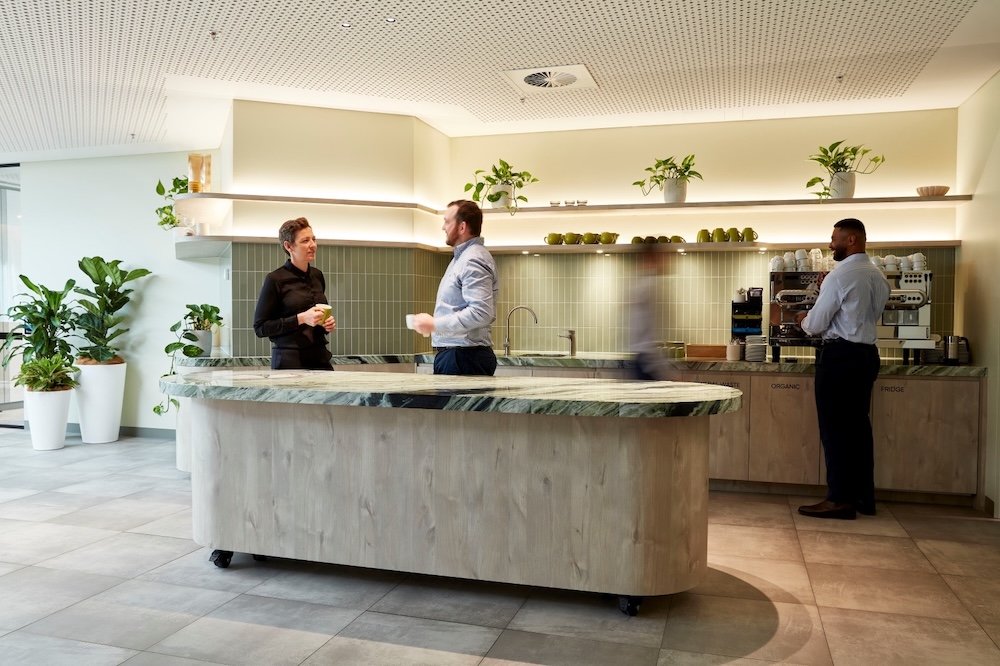
The Work Project's coworking spaces are designed to support that in-person work. Each location sits inside a Grade A building on a premium CBD address with hospitality-inspired service and meeting and event spaces built for the open team conversations a strong culture depends on. Explore our coworking space locations across Australia today and book a tour to see how we can support your business.