What are startup accelerators and how do they work in Singapore?
Apr 24, 2026

Singapore's standing as a startup super-hub is hard to overstate. Over 4,500 tech startups operate across the Red Dot, supported by more than 220 accelerators and incubators, a suite of government-backed funding schemes, and a financial infrastructure specifically designed to take companies from idea to institutional investment. For first-time founders and corporate teams exploring the scene, the question isn't whether Singapore has the resources. It's knowing which ones to use, and when.
A startup accelerator provides the engine: intensive mentorship, seed capital, and a compressed runway that collapses years of business development into a few focused months. The environment where founders execute their refined strategies after graduation matters just as much.
What is a Startup Accelerator?
A startup accelerator is a fixed-term, cohort-based programme that provides seed investment, structured mentorship, and access to investor networks in exchange for a small equity stake. Most Singapore programmes run for three to six months and culminate in a Demo Day, where founders pitch to a room of global angel investors and venture capital firms.
The term gets used interchangeably with 'incubator', but the two operate differently. Incubators offer a longer-term, more flexible environment for founders still refining their ideas. They typically don't take equity, and there is no hard deadline. Venture builders, such as Antler and Entrepreneur First (EF), sit in a separate category: they help form founding teams from scratch, before the company even exists.
Key characteristics of a startup accelerator programme:
- Fixed duration: Typically three to six months, with a structured curriculum and clear milestones throughout
- Competitive selection: Most Singapore programmes accept 5 to 15% of applicants, screening on founder-market fit above all else
- Mentorship by Accredited Mentor Partners (AMPs): Founders work directly with experienced operators and investors, not just advisors on paper
- Demo Day: The programme culminates in a high-stakes pitch to 500+ global investors, often the first serious test of a founder's fundraising instincts
How do startup accelerators work?
The lifecycle follows a clear arc, from application through to exit. In 2026, Singapore programmes have shifted their emphasis toward market fit and unit economics over raw growth metrics, reflecting a broader maturation of the regional funding environment.
The accelerator journey:
- Application and selection: Teams are evaluated on founder-market fit, the strength of the problem being solved, and the coachability of the founding team. Acceptance rates at top-tier programmes sit between 5 and 15%.
- Seed investment: Most Singapore accelerators offer between SGD $50,000 and $150,000 in exchange for 5 to 10% equity, designed to cover living costs and early operational expenses during the cohort.
- The residency phase: Intensive workshops cover go-to-market (GTM) strategy, legal compliance, AI integration, and financial modelling. The pressure is structured and intentional.
- Demo Day: The cohort presents to a curated audience of global investors. For many Singapore founders, it is their first exposure to serious institutional capital and a pivotal step toward a Series A round.
Leading Startup Accelerators in Singapore
Commercial and VC-Backed Accelerators
- Iterative: Often described as the Y Combinator of Southeast Asia, Iterative runs structured batches with lead-partner mentorship and a strong alumni network across the region.
- Accelerating Asia: Operates as both a startup accelerator and a VC fund, providing pre-Series A startups with capital and hands-on support through the growth phase.
- Surge (Peak XV): One of the most selective and best-resourced entry points in the region, with a focus on rapid scale and access to Peak XV's extensive investor connections.
Ecosystem Builders and Incubators
- BLOCK71 (NUS Enterprise): Less accelerator than institutional anchor, BLOCK71 functions as the physical and community hub for Singapore's startup scene, with NUS Enterprise's network underpinning its support.
- SMU IIE (Business Innovations Generator, BIG): A zero-equity, university-linked incubator for early-stage founders taking a concept to market, with strong commercialisation support and no equity dilution.
Sector-Specific Leaders
- FinTech: The Visa Accelerator Program targets growth-stage companies, while the Global FinTech Accelerator supports earlier-stage teams within Singapore's MAS-backed financial innovation framework.
- Deep Tech and AI: SGInnovate remains the government-linked benchmark for deep tech. The Google for Startups Accelerator: AI First has become a prominent track for AI-native startups.
- Sustainability: Shell StartUp Engine and Temasek-backed climate-tech initiatives are the primary institutional routes for sustainability-focused founders, reflecting Singapore's national green economy priorities.
Accessing Government Funding for Startups in Singapore
Singapore's government funding for startups extends well beyond accelerator programmes. The 2026 landscape includes significant capital injections at both equity and grant levels, with a clear tilt toward deep tech and sustainability.
Equity funding:
- Startup SG Equity: A S$1 billion commitment now extended to support deep-tech firms at the growth stage. Co-investments are made alongside qualified third-party investors, reducing the dilution burden on founders.
- Anchor Fund: The second S$1.5 billion tranche brings the Anchor Fund to S$3 billion in total, targeted at helping Singapore-grown companies list locally and attract institutional capital.
Non-dilutive business grants:
- Startup SG Tech: Proof-of-Concept (POC) and Proof-of-Value (POV) grants of up to SGD $500,000 for proprietary technology development, a primary route for deep tech and AI startups.
- Enterprise Development Grant (EDG): Up to 70% support for sustainability-driven projects in 2026, covering core capabilities, innovation, and market access initiatives.
- Market Readiness Assistance (MRA): Up to SGD $100,000 per new market for startups going global, covering legal set-up, partner identification, and overseas promotional activities.
The Post-Accelerator Transition: Moving to Professional Office Space
Completing an accelerator programme is a milestone, not a finish line. When the cohort ends, so does access to shared desks, communal momentum, and the built-in support structure. What comes next is where many Singapore startups stall.
Graduating founders are in active fundraising mode. Every interaction with a potential investor or enterprise partner carries a signal, and the environment you operate from is part of that signal. A Series A investor walking into a meeting at a Raffles Place CBD address reads differently than a coffee-shop pitch or a student innovation hub. The former says: This team is ready to scale.
The Work Project's flagship CBD locations give post-accelerator startups the professional infrastructure their ambition demands:
- Flexible workspace options: Scale your footprint from a single desk to a private office as your team grows, without committing to a long-term lease
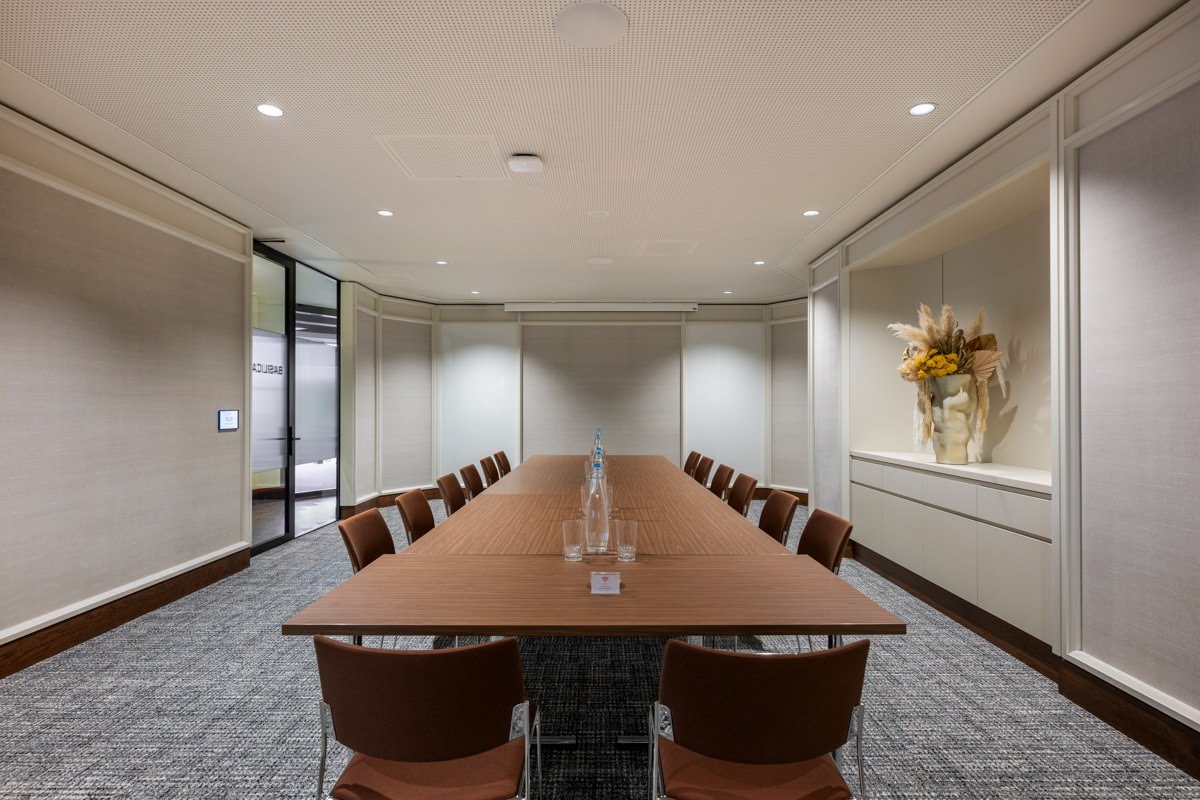
- Premium meeting environments: Private rooms designed for focused investor conversations and client presentations, away from the noise of an open floor
- MARK Business Club access: A networking bridge to established corporate partners, industry leaders, and potential acquirers already embedded in Singapore's business community
Accelerating Your Way to Success in the Red Dot

The structured intensity of a cohort accelerates your thinking. The right professional environment sustains and executes it. Both matter, and the transition between the two deserves as much intention as the application itself.
Securing your first major investor meeting from a prestigious CBD address is not a vanity decision. It is a credibility signal at precisely the moment credibility is being assessed. The Work Project supports post-accelerator startups with flexible, premium workspaces in the heart of Singapore's financial district, complete with the infrastructure a fast-moving founding team needs to operate at full speed.
Book a tour at our Battery Road office near the Singapore River, or explore our coworking space in Raffles Place at CapitaSpring, and give your startup the professional home it deserves.