Guide to Funding and Grants for Startups in Australia
Jun 15, 2026

Australian startup founders working through their first capital plan have two broad routes to business financing for startups:
- Venture capital for money in exchange for equity in the business.
- Government grants and tax incentives for non-dilutive capital funding without taking a share of the business.
This guide is a curated directory of active funding for startups and small businesses in Australia, organised by the stage of the business and the type of work being funded. We cover federal R&D incentives, national commercialisation grants and state-level small business start up grants, with eligibility, funding amounts and best-fit business types for each.
National Innovation and R&D Incentives
Federal R&D programmes form the foundation of Australian tech and deep-science funding. These are available nationwide for eligible small businesses and remain the most commonly accessed sources of business financing for R&D-heavy startups at the early stage.
Research and Development Tax Incentive (RDTI)
The Research and Development Tax Incentive (RDTI) is the federal government's flagship programme for supporting business investment in research and development. Administered jointly by the Australian Taxation Office (ATO), it provides eligible companies with a tax offset against qualifying R&D expenditure.
Key details:
- Refundable tax offset of 18.5% above the corporate tax rate for companies with annual turnover under A$20 million
- Minimum R&D expenditure of A$20,000 per income year
- Registration must be completed within 10 months of the end of the company's income year
Best suited to: Tech startups, biotech companies and Australian manufacturers developing new products, software or processes.
CSIRO Kick-Start
CSIRO Kick-Start gives early-stage Australian startups matched funding to access CSIRO's research expertise, equipment and facilities. The voucher programme provides funding for startups that are ready to explore, validate or accelerate an R&D idea with expert help.
Key details:
- Matched-funding vouchers between A$10,000 and A$50,000
- Funds can be used for prototyping, product testing or process improvement
- Businesses must have annual turnover or operating expense under A$10 million, or have been trading for less than three years
- Hold an ACN or ICN
- Be registered for GST
- Be able to provide matched funding for the project
Best suited to: Early-stage startups that need technical validation or high-end lab testing before going to market.
Commercialisation and Growth Grants
Commercialisation grants form the next layer of startup funding for small business owners ready to take a product into their target market. The two programmes below cover both domestic scaling and export-market entry.
Industry Growth Program (IGP)
The Industry Growth Program (IGP) is the federal government's successor to the former Entrepreneurs' Programme, designed to support commercialisation and scaling in priority areas defined by the National Reconstruction Fund (NRF). The programme directs funding toward sectors including renewables and low emissions, medical science, transport and value-add manufacturing.
Key details:
- Early-stage commercialisation grants from A$50,000 to A$250,000
- Commercialisation and growth grants from A$100,000 to A$5 million
- Participation in the IGP Advisory Service is required before applying for a grant
Best suited to: Scaling SMEs and startups operating in manufacturing or deep-tech sectors aligned with NRF priorities.
Export Market Development Grant (EMDG)
The Export Market Development Grant (EMDG), administered by the Australian Trade and Investment Commission, reimburses Australian businesses for eligible costs associated with promoting their products or services in overseas markets.
Key details:
- Three tiers based on export readiness: Ready to Export, Exporting within Existing Markets and Exporting to New Key Markets
- Capacity to spend at least $20,000 on marketing and promotional activities. This must be exclusive of the grant amount.
- Grant agreements as matched funding up to A$80,000 per financial year for Tier 3
Best suited to: Australian startups expanding to the key markets outlined by the EMDG eligibility criteria
State-Specific Booster Grants
State governments in Australia also run their own start up grants to support new small businesses headquartered in their jurisdictions. The two below are among the most active in 2026, supporting New South Wales and Queensland startups respectively.
MVP Ventures (New South Wales)
MVP Ventures funds the pre-market development of innovative products by businesses headquartered in New South Wales. The programme is designed to move a prototype toward a commercial release.
Key details:
- Matched grants of A$20,000 to A$75,000, with the business contributing 50 per cent of project costs
- Eligible products must sit between Technology Readiness Levels (TRL) 3 and 9
- Businesses must be headquartered in NSW with annual turnover under A$400,000
Best suited to: Sydney-based startups building a prototype or minimum viable product (MVP).
Female Founders Co-Investment Fund (Queensland)
The Female Founders Co-Investment Fund is a Queensland government programme that matches private investment into female-led startups. Unlike a standard grant, the fund only releases capital once a startup has secured private investors.
Key details:
- Grants of A$50,000 to A$200,000
- Matched on a 1:3 ratio, with the Queensland Government contributing A$1 for every A$3 of private investment secured
- Businesses must be at least 51 per cent female-owned
Best suited to: Queensland-based female-led startups running an active capital raise.
The Work Project: Where Australia's Funded Startups Scale

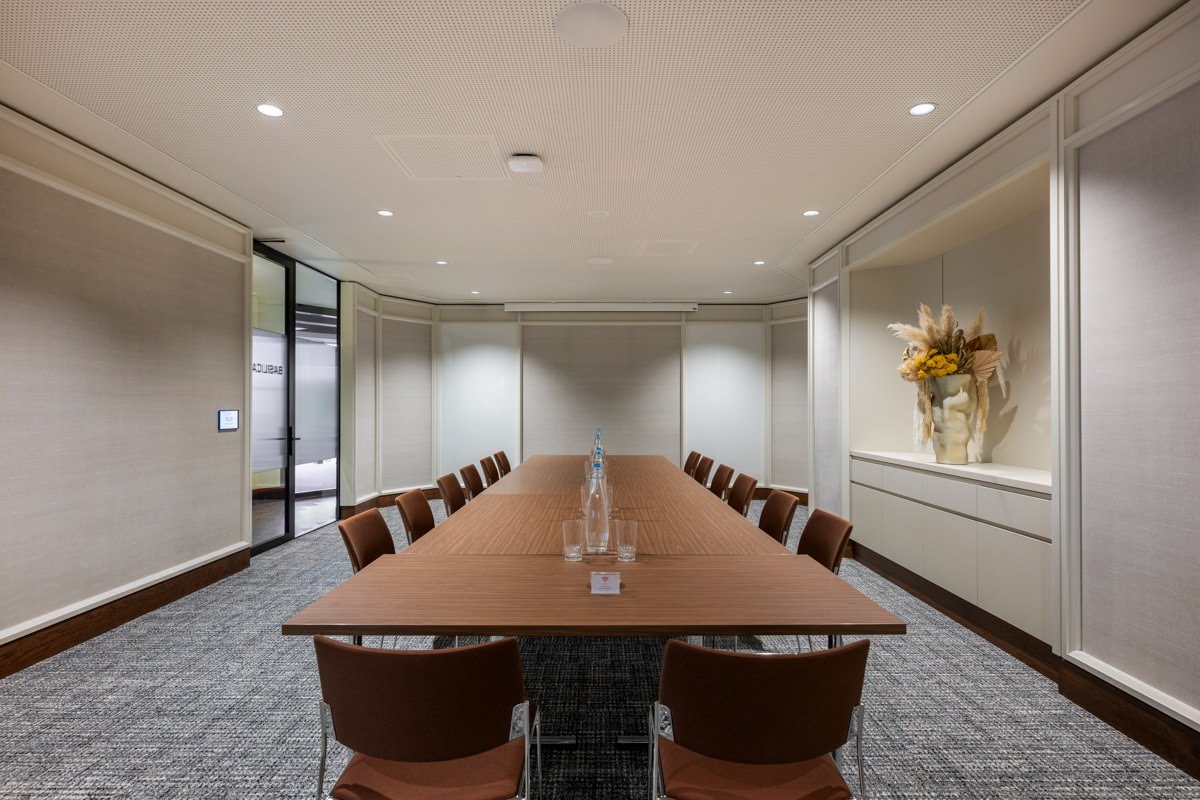
Thinking of applying for a grant or hosting a big investor pitch? The Work Project’s coworking locations sit inside Grade A buildings across Sydney, Melbourne, Brisbane and Perth. Get access to a credible business address that supports your best work and well-appointed meeting rooms to make a solid first impression on potential investors.
Book a tour at any of our coworking office locations across Australia today.